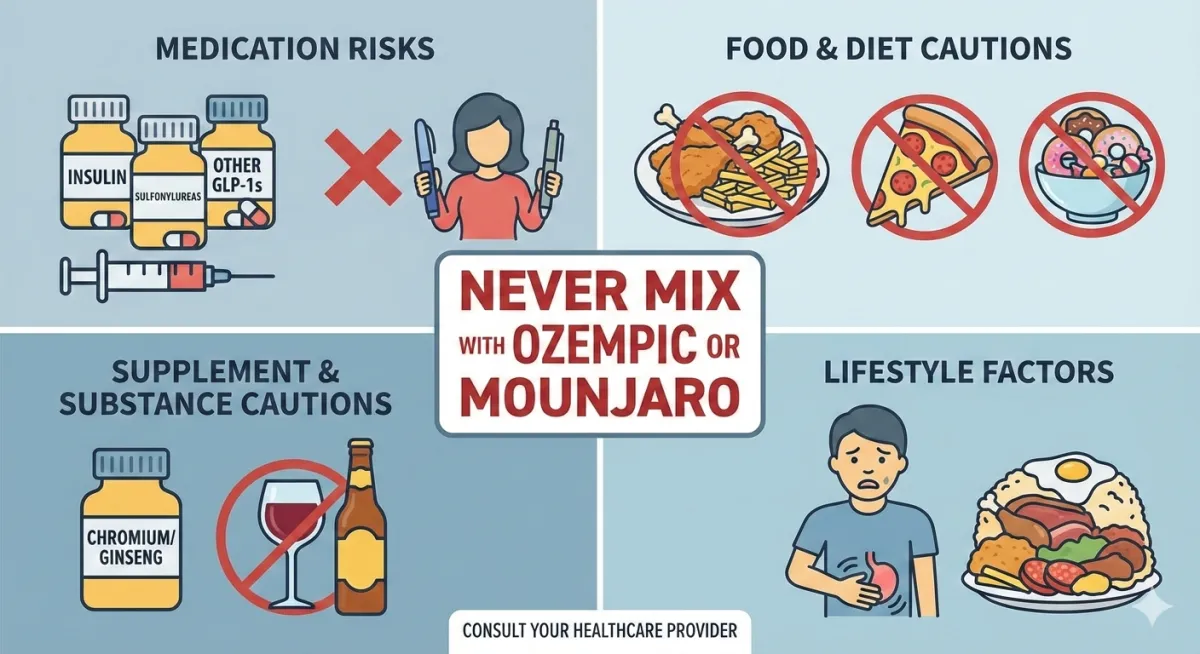
12 Things to Avoid with Ozempic or Mounjaro
Introduction
GLP-1 receptor agonists like Ozempic (semaglutide) and Mounjaro (tirzepatide) are powerful injectable medications used for managing type 2 diabetes and, in some cases, supporting weight loss. These drugs can produce meaningful benefits in blood glucose control and appetite regulation, but they also interact with other substances and behaviors in ways that can increase side effects or reduce effectiveness.
Understanding what you should never mix with these medicines can help you stay safe and get the best results from your treatment.
🎥 Watch the Video
Prefer watching? Dr. Gerard Acloque explains this topic in the video below:
👉 Watch on YouTube
What Are Ozempic & Mounjaro?
Ozempic and Mounjaro are both part of a drug class called GLP-1 receptor agonists. They act on hormones that help regulate appetite and insulin release after meals, which can improve blood sugar levels and help support weight management.
Ozempic contains semaglutide.
Mounjaro contains tirzepatide, which has a dual GLP-1 and GIP action, meaning it may impact more pathways in metabolism than older GLP-1 drugs.
These medications should always be taken under qualified medical supervision.
Why Some Things Should Never Be Mixed
Combining certain substances or behaviors with these drugs can:
Worsen nausea, vomiting, or diarrhea
Increase risk of dehydration or electrolyte disturbance
Impact nutrient absorption
Interact directly with how the drugs are metabolized
Reduce medication effectiveness
Some interactions are obvious (like alcohol), while others are more subtle (certain supplements or foods).
🧾 12 Things You Should Never Mix with Ozempic or Mounjaro
Below are common categories of things people sometimes mix with GLP-1 medications that can be risky:
Alcohol and Sugary Drinks
Alcohol can exacerbate nausea and dehydration, common side effects when starting GLP-1 therapy. Sugary beverages can counteract glycemic control.Other Medications Without Doctor Approval
Some drugs interact with diabetes medications or affect blood sugar unpredictably. Always check with a provider first.Unsupervised Supplements
Herbal or weight-loss supplements can have hidden ingredients or interact unexpectedly.Caffeine Overload
Excessive caffeine (coffee, energy drinks) plus GLP-1 drugs may worsen gastrointestinal symptoms.Dehydration & Electrolyte Imbalance
Vomiting, diarrhea, or sweating can increase the risk of dehydration when on Ozempic or Mounjaro.Mixing Multiple GLP-1 Medications
Taking Ozempic and Mounjaro together isn’t recommended and can lead to additive side effects and safety concerns.Very High-Fat Meals
Fatty meals slow digestion and can amplify nausea or reduce appetite more than intended.Excessive Exercise Without Hydration
Intense workouts without proper fluid replacement may increase discomfort and dizziness.Unsupervised Extreme Dieting
Very low-calorie diets combined with appetite suppression from GLP-1s may lead to nutrient deficiencies.Herbal Remedies
Some herbs can affect blood sugar or interfere with medication metabolism. Always consult your doctor first.Recreational Drugs
Combining GLP-1 meds with recreational substances can unpredictably alter heart rate, hydration, and metabolism.Taking Ozempic/Mounjaro Without Medical Oversight
Adjusting or combining therapies on your own can increase serious side effect risk — always work with your healthcare team.
📋 How to Use GLP-1 Medications Safely
✔ Always take Ozempic or Mounjaro exactly as prescribed
✔ Talk with your provider before adding supplements or new medications
✔ Stay well hydrated
✔ Report persistent symptoms like nausea, vomiting, or severe dehydration
✔ Ask about dietary adjustments that support your goals
Your doctor is your best partner in safe medication management.
❓ FAQ SECTION
Q: Can I mix Ozempic and Mounjaro together?
A: No — taking both simultaneously is generally not recommended due to overlapping effects and increased side effect risk.
Q: Is coffee safe with these medications?
A: Moderate coffee is usually fine, but excessive caffeine may worsen GI symptoms. YouTube
Q: Should I stop medications if I feel sick?
A: Contact your provider before stopping any prescribed medicine.
🎥 Watch the Video Again
For quick review and Dr. G’s explanation:
👉 Watch on YouTube


