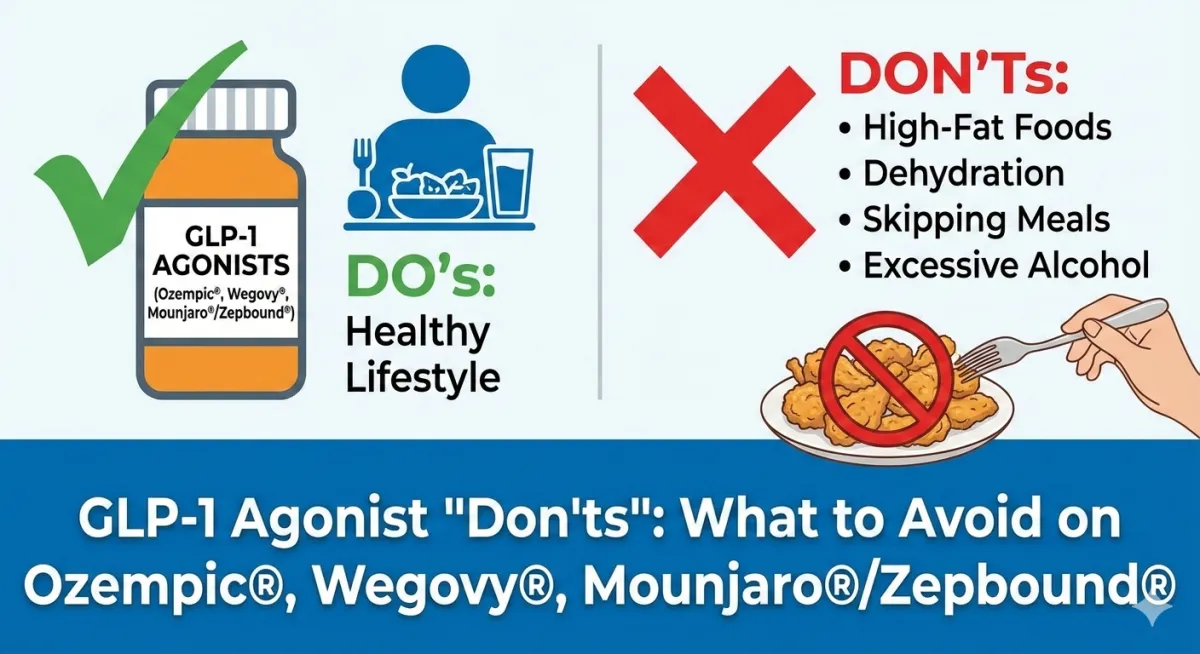
GLP-1 Agonist “Don’ts”: What to Avoid on Ozempic®, Wegovy®, Mounjaro®/Zepbound®
If you’re taking a GLP-1 medication like semaglutide (Ozempic®/Wegovy®) or tirzepatide (Mounjaro®/Zepbound®), you can absolutely see meaningful improvements in weight and blood sugar—but what you do day-to-day matters. Below are the most important “don’ts” patients should know to reduce side effects, stay safe, and get better results.
🎥 Watch the Video
Prefer watching instead of reading?
Watch Dr. G explain it here:
First, the big “don’t”: don’t expect a magic bullet
One of the most common misconceptions is that GLP-1 medications “do all the work.” These medicines can be powerful tools, but they’re intended to be used along with lifestyle changes—not instead of them. For example, Wegovy is indicated for chronic weight management with a reduced-calorie diet and increased physical activity.
A healthier long-term outcome usually comes from combining:
sustainable movement
a realistic nutrition plan
sleep and stress support
a plan for maintaining progress (so the “urge” doesn’t come roaring back)
Don’t skip movement: start with a realistic exercise plan
Aim for 150 minutes per week—build up safely
A practical target for most adults is at least 150 minutes of moderate-intensity activity per week (like brisk walking), plus muscle-strengthening activity on 2 days per week.
If you’ve been sedentary, start smaller and build consistency:
Week 1–4: walk 15–20 minutes, 2–3 days/week
Then increase toward 30 minutes, 3–5 days/week
Add time first, then add pace/distance
Add strength training to protect lean muscle
As weight comes off, people can lose a mix of fat and lean mass. Adding resistance training (bodyweight, bands, or weights) supports strength and function. The CDC also recommends muscle-strengthening activities at least twice weekly.
Don’t wait until you’ve lost significant weight to begin—start with what’s safe for you now.
Don’t overeat (and why that matters on GLP-1 meds)
One reason GLP-1 medications can reduce appetite is that they affect digestion and satiety signals. When you overeat, you’re much more likely to trigger:
nausea
uncomfortable fullness
reflux
vomiting (in some people)
Practical tip: Serve a smaller portion than usual. Eat slowly. Pause halfway and reassess.
Don’t load up on fatty/fried foods if constipation or nausea hits
High-fat, fried meals can be especially tough while on GLP-1 therapy—many patients notice worse nausea, heaviness, or constipation.
If constipation is an issue, prioritize:
water (more on that below)
fiber from a mix of vegetables, fruit, beans, and whole grains (as tolerated)
regular movement
If symptoms are persistent or severe, talk with your clinician about safe options to help bowel regularity.
Don’t trigger reflux: be cautious with spicy foods if you get heartburn
If you already deal with reflux/heartburn, spicy foods may worsen symptoms—especially if you’re feeling “full longer” than you used to.
Don’t ignore reflux that’s new or worsening. Ongoing heartburn can impact sleep, eating patterns, and medication tolerance.
Don’t rely on refined carbs as your “default”
Refined carbohydrates (like many white breads, pastries, and some pastas) can make blood sugar harder to manage for people with diabetes and can work against weight-loss goals.
A more helpful approach is building meals around:
protein (see below)
high-fiber carbs (when appropriate)
colorful vegetables
healthy fats in moderate portions
Don’t ignore gas/bloating triggers (some veggies may bother you)
Vegetables are generally a win—but some people notice extra gas/bloating with certain cruciferous vegetables (like broccoli/cauliflower) while adjusting.
Don’t assume you must avoid all vegetables. Instead:
reduce the portion of the specific trigger food
try cooked vs. raw
reintroduce slowly
Don’t get dehydrated—protect your kidneys
Dehydration is a bigger deal than many people realize on these medications—especially if nausea, vomiting, or diarrhea occur.
Tirzepatide’s prescribing information warns that acute kidney injury can occur, sometimes related to dehydration from gastrointestinal side effects, and recommends monitoring renal function in at-risk situations.
Simple hydration checks:
urine pale yellow most of the day
dizziness/lightheadedness is not “normal”
headaches or unusual fatigue may signal you’re behind on fluids
If you can’t keep fluids down, that’s a reason to contact your clinician promptly.
Don’t buy GLP-1 meds from non-medical sources
This is a big one: don’t source prescription medications from non-professionals or “too good to be true” deals.
These medications should be prescribed and monitored by a licensed clinician who can:
review your history and contraindications
check labs as appropriate
counsel on dose escalation and side effects
coordinate follow-up for safety
Don’t chase rapid weight loss or rush the dose
Slower weight loss is often more sustainable
Fast weight loss can backfire if lifestyle habits don’t change along the way. A steady pace gives you time to:
build an exercise routine
improve your “relationship with food”
learn what meals feel best on the medication
More dose isn’t always better
Many patients assume the goal is to reach the highest dose quickly. In real-world practice, some people do well at lower or mid-range doses and avoid side effects.
Also note: Zepbound carries key safety warnings and contraindications—such as contraindication in patients with a personal or family history of medullary thyroid carcinoma or MEN2.
That’s another reason dosing and monitoring should be individualized and medically supervised.
🎥 Watch the Video (again)
Prefer watching instead of reading?
Watch Dr. G break it all down here:
When to call your clinician
Reach out promptly if you have:
ongoing vomiting or inability to keep fluids down
signs of dehydration (dizziness, very dark urine)
severe constipation, severe abdominal pain, or persistent worsening symptoms
concerning neck symptoms (like a new lump/swelling or hoarseness) while on therapy (seek medical guidance right away)
Medical disclaimer
This article is for general education only and isn’t a substitute for personalized medical advice. Medication choices, dosing, and side effect management should be discussed with your clinician—especially if you have diabetes, kidney disease, reflux, or other chronic conditions.
FAQ SECTION:
Q: What should I avoid eating while on semaglutide or tirzepatide?
A: Many people do better avoiding large meals and limiting fatty/fried foods—especially if nausea or constipation is an issue. If you have reflux, spicy foods may worsen symptoms. Choose meals that are smaller, protein-forward, and fiber-rich as tolerated.
Q: Do I really need to exercise if I’m on a GLP-1 medication?
A: Yes—exercise supports weight loss maintenance, improves insulin sensitivity, and helps preserve strength. A common goal is 150 minutes/week of moderate activity plus strength training twice weekly.
Q: Why does overeating make me feel so sick on these meds?
A: GLP-1 therapies can affect satiety and digestion. Overeating can intensify nausea, reflux, and discomfort—smaller portions and slower eating often help.
Q: How much water should I drink on GLP-1 medications?
A: Needs vary, but the goal is to avoid dehydration—especially if you’re experiencing nausea, vomiting, or diarrhea. Dehydration can contribute to kidney complications, so contact your clinician if you can’t maintain fluids.
Q: Is it safe to increase my dose faster to lose weight quicker?
A: Not usually. Faster dose increases can raise the risk of side effects. Many patients do well at lower doses under clinician supervision, and sustainable weight loss often comes from combining medication with lifestyle changes.
Q: Who should NOT take medications like Wegovy or Zepbound?
A: Some people have contraindications or need special monitoring. For example, Zepbound is contraindicated in patients with a personal or family history of medullary thyroid carcinoma or MEN2. Always review your history with a clinician before starting.


